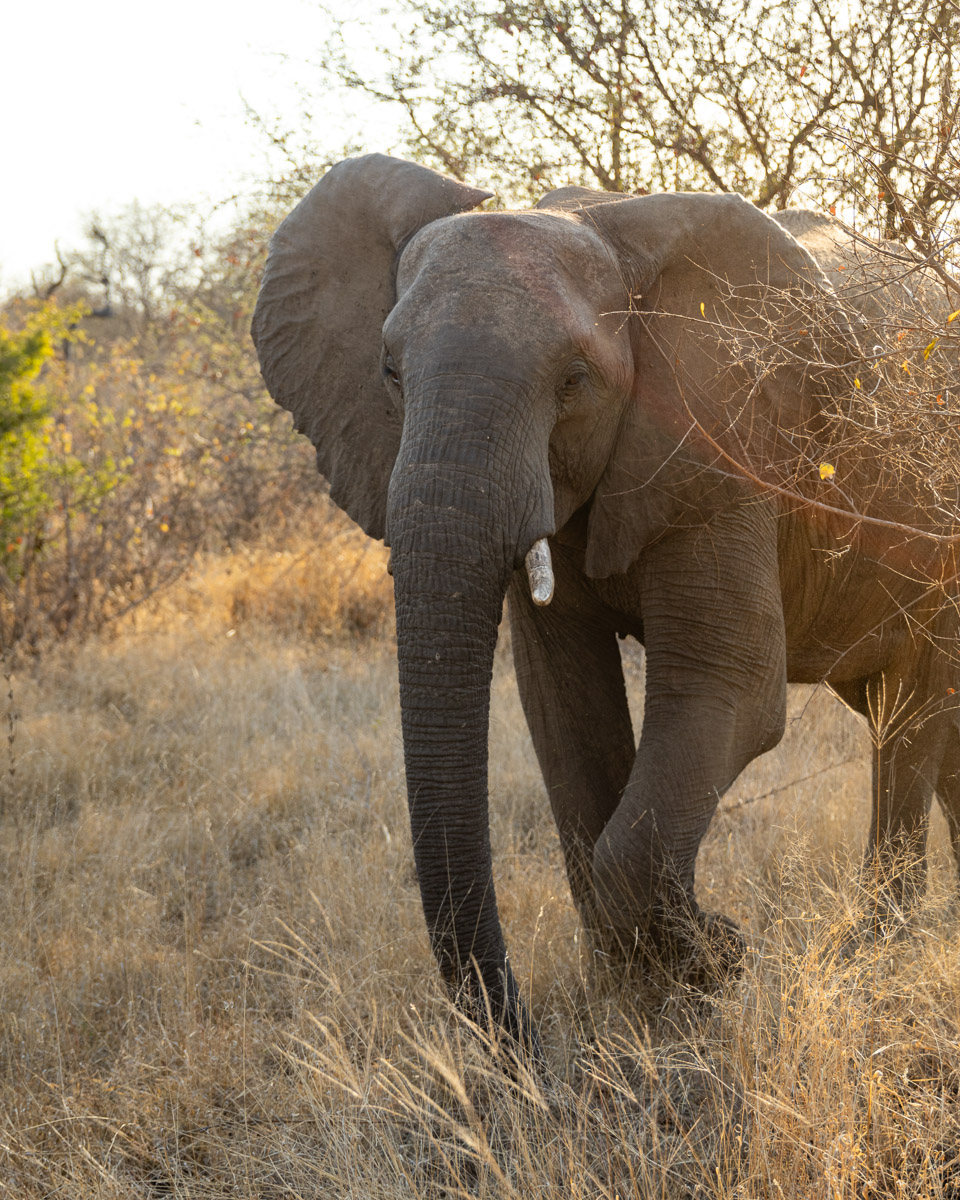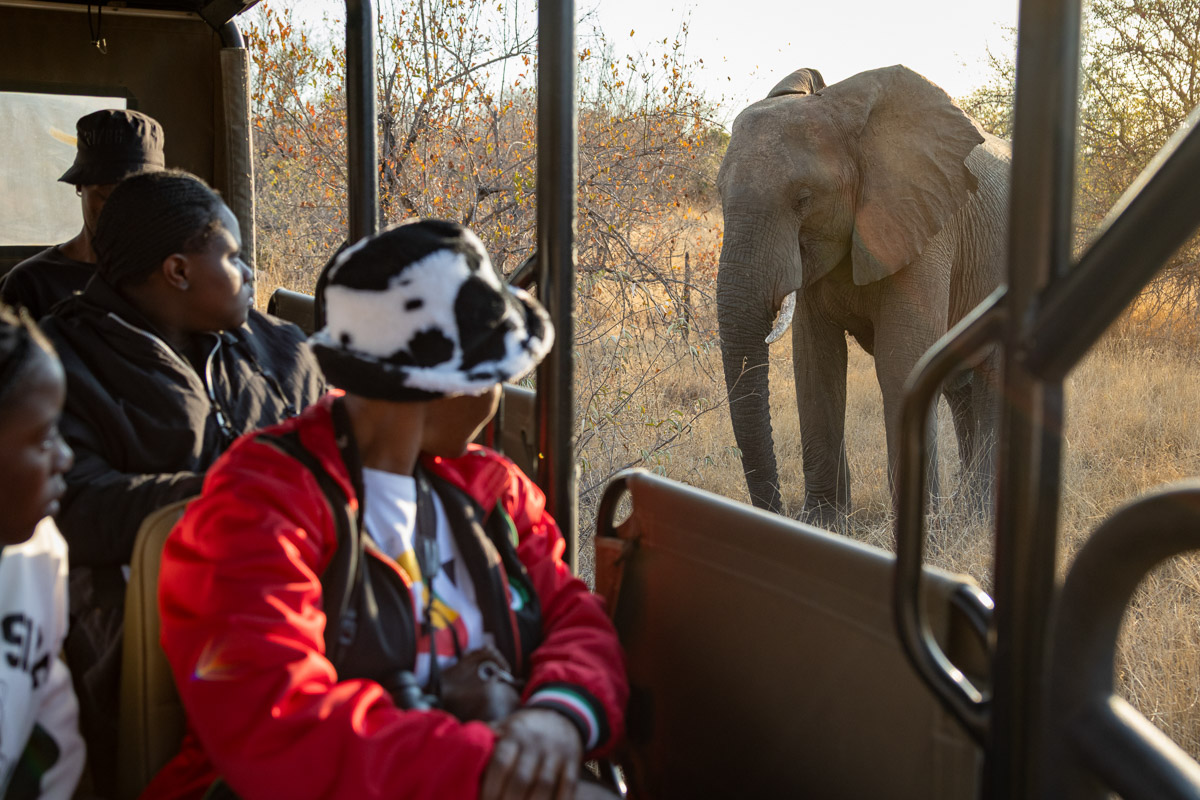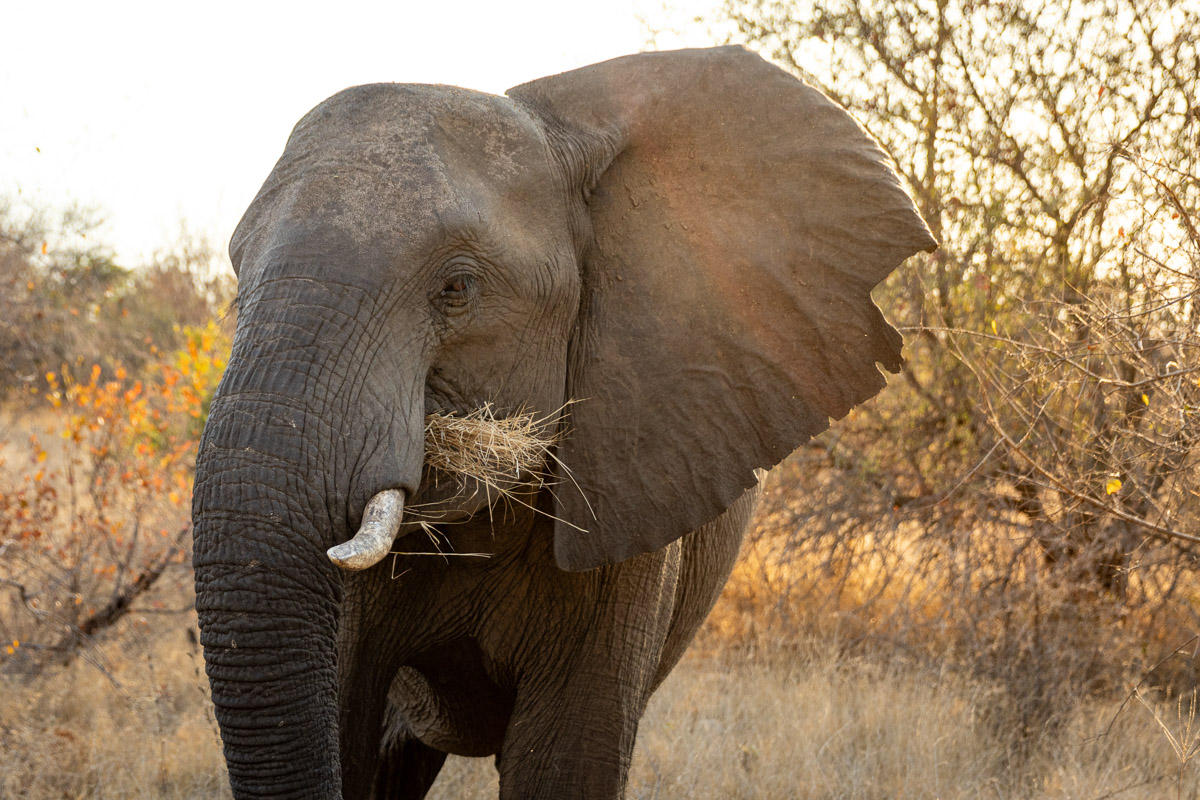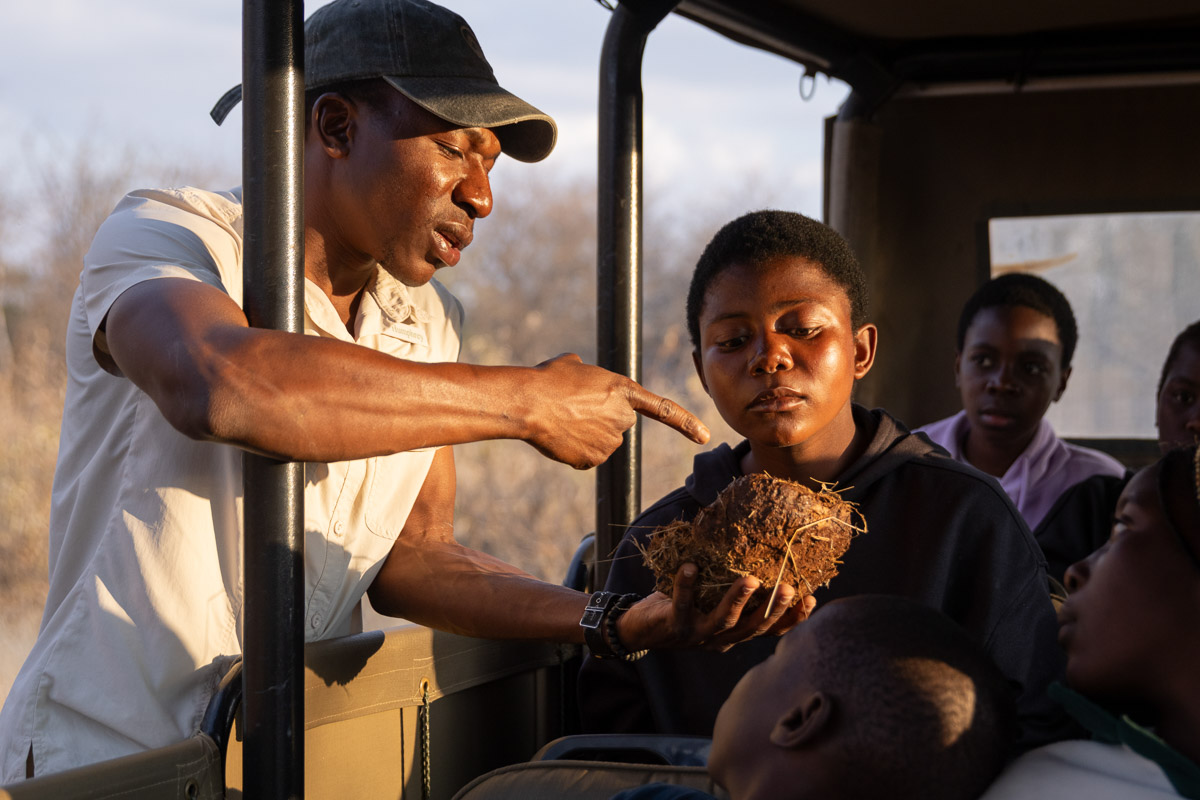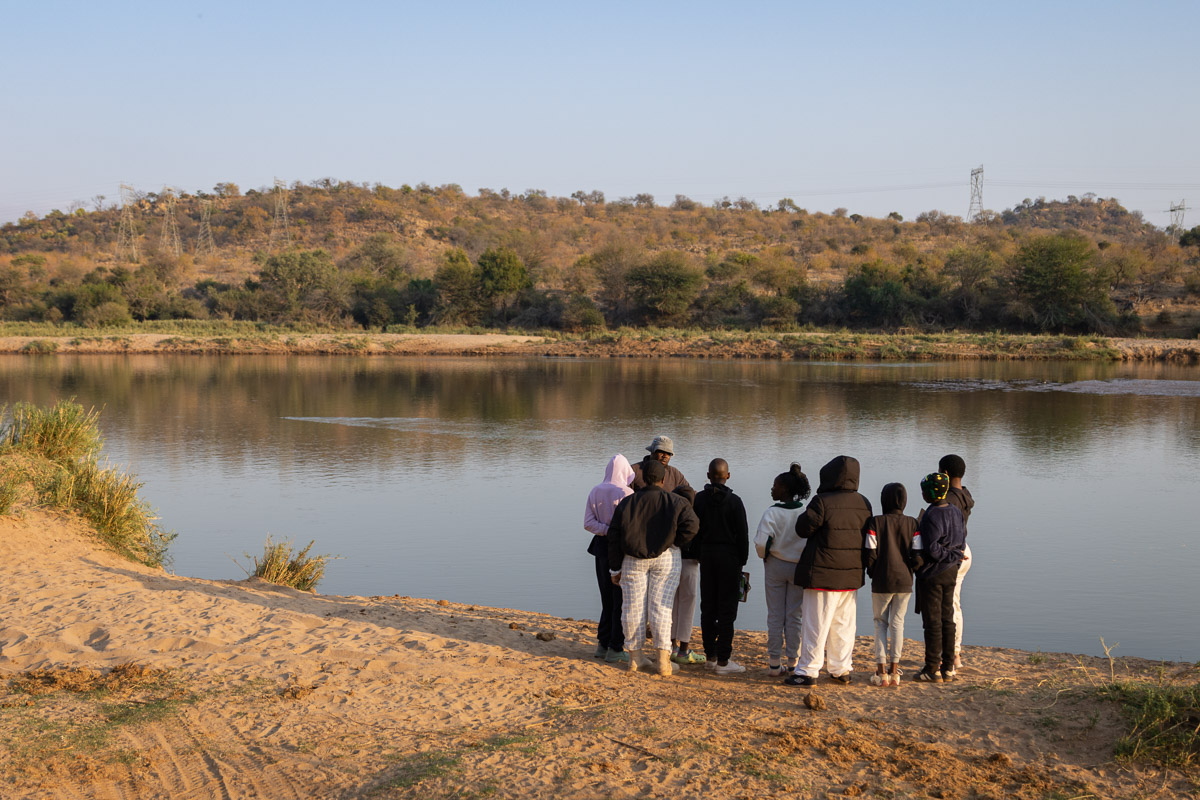
Knowing that their general movement would likely bring the bull in our direction, we sat quietly and waited. The air filled with the sounds of rustling, slurping, and chomping as the herd continued their task. Here and there, a low belly rumble reverberated through the air – their secret language echoing softly. One step closer. Then another. Slowly but surely, the bull wandered nearer as he ate. With the eight children from our partners, The Bush Babies, transfixed by his presence, Humphrey began speaking gently to break the growing tension.
Now just a few metres away, the bull lifted his head to acknowledge us. He paused momentarily, assessing our presence, before returning peacefully to his meal.
“Do you want to leave?” Humphrey asked his captivated audience. In unison, eight heads shook side to side, accompanied by a whispered, “No!”. For another ten minutes we lingered – even the ones who had first been afraid now fully immersed in the magic of this intimate moment with one of nature’s true giants. Eventually, though, the spell was broken as the bull slowly turned back into the bush, leaving us to continue our game drive.
For some of these Bush Babies, it was their very first time in nature – and what a welcome they received! Founded by the passionate Lewyn Maefala in 2015, The Bush Babies was born from a vital realisation. While on placement with the now-famous Black Mambas (South Africa’s first all-female anti-poaching unit), Lewyn noticed one key piece was missing: an environmental education arm for local communities.
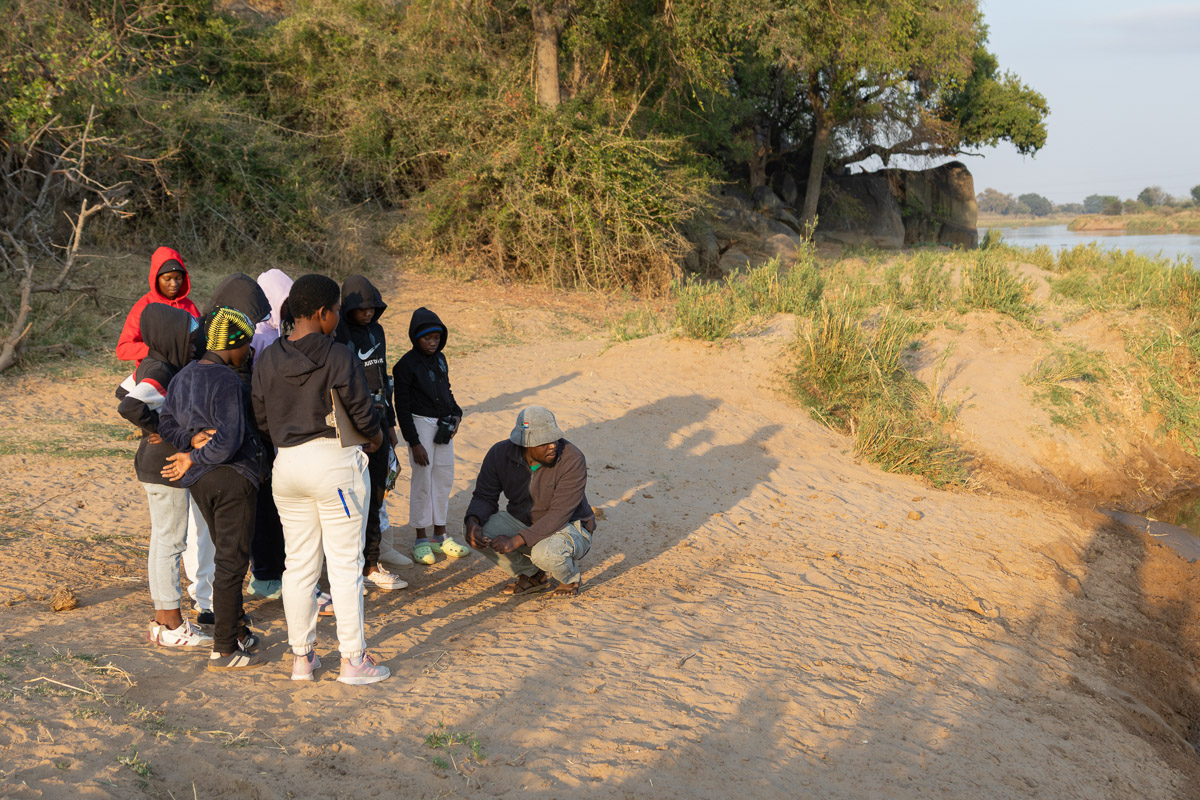
With a mission to raise responsible citizens and environmental stewards, The Bush Babies now visit schools across the region, delivering monthly lessons that cultivate knowledge, curiosity, and pride in our natural heritage. But there is only so much that can be taught in a classroom. That’s where Koru Camp comes in – a place to bring those lessons to life. Here, learners don’t just hear about conservation; they experience it firsthand. They feel the earth beneath their feet, witness the movement of a herd, trace the prints of a predator. They become part of nature, not separate from it.
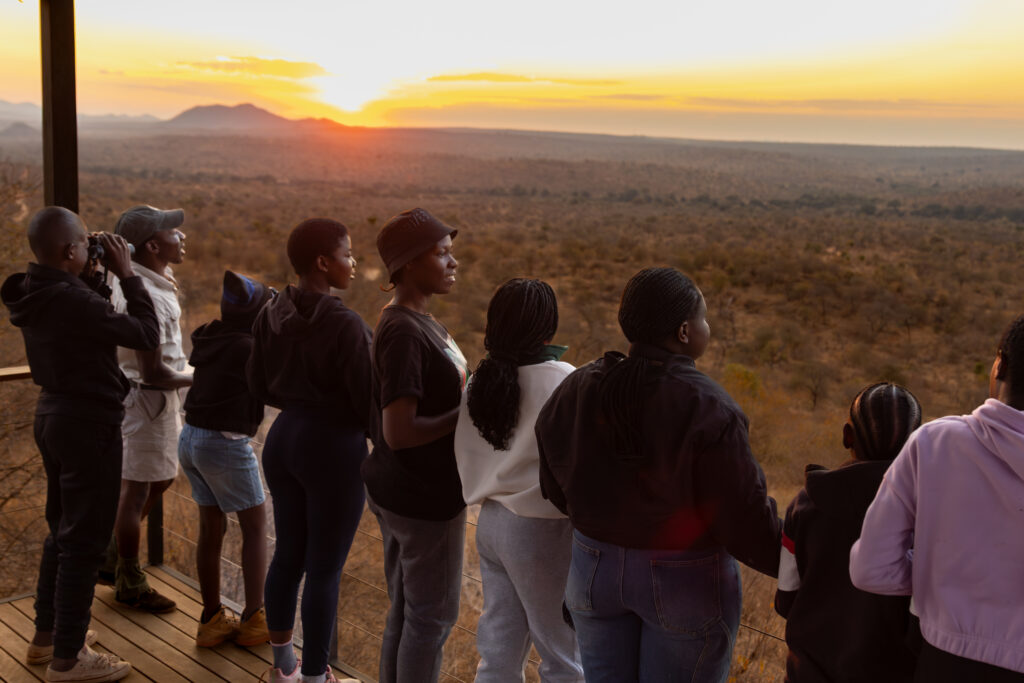
Over the course of the camp, the learners enjoyed a host of our interactive games and activities, along with additional lessons introduced by their facilitator, Tsakane. As well as elephants, they marvelled at crocodiles, hippos, giraffes, warthogs, and all kinds of antelope. And though the big cats didn’t show themselves, Tsakane wasn’t deterred. “I loved that we focused on the little things, like tracks and birds. So often these are forgotten when you’re looking for the ‘big’ stuff. My favourite moment of the camp was finally learning the difference between a rhino and a hippo track – something I’ve always struggled with!”
Back at camp on their final evening, the close-up encounter with the elephant was all the learners could talk about. By then, the story had grown so embellished that several were convinced the elephant had touched the vehicle (it hadn’t!). Though many were scared at first, the experience seemed to shift their entire perception. “Would you want to do it again?” they were asked. The answer came in an excited, resounding “YES!”
Proof, perhaps, of the power of nature to advocate for herself – if only she is given the chance.
Thank you to the Bush Babies for joining us and to the Connected Planet Foundation for sponsoring this camp and gifting such a life-changing opportunity to these young learners.