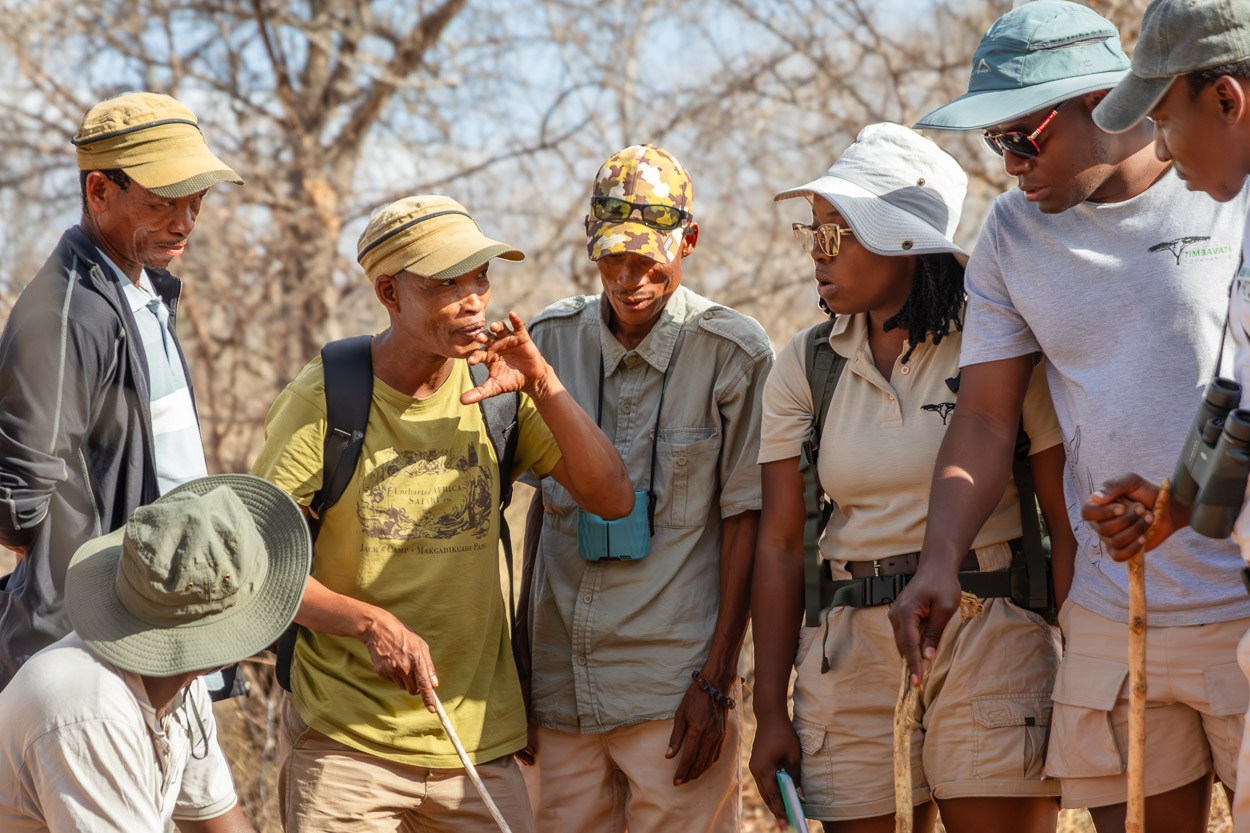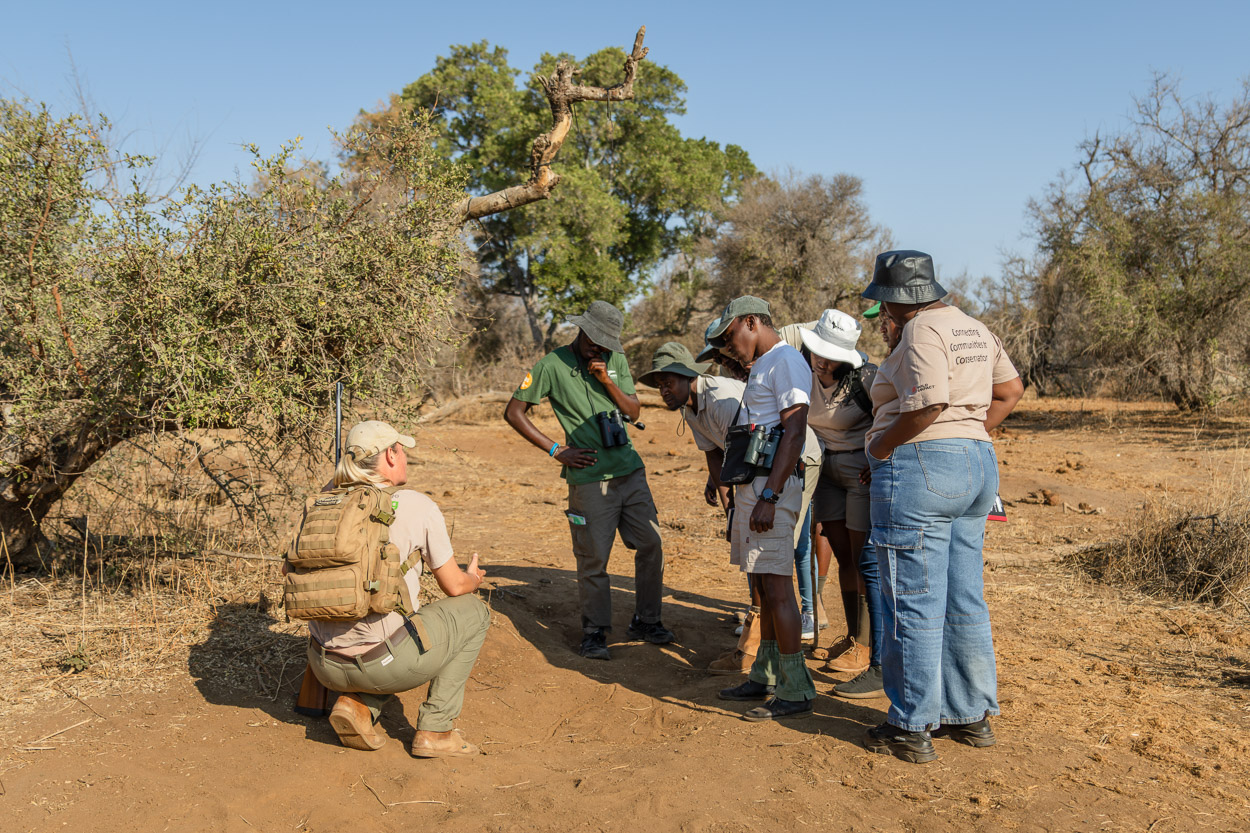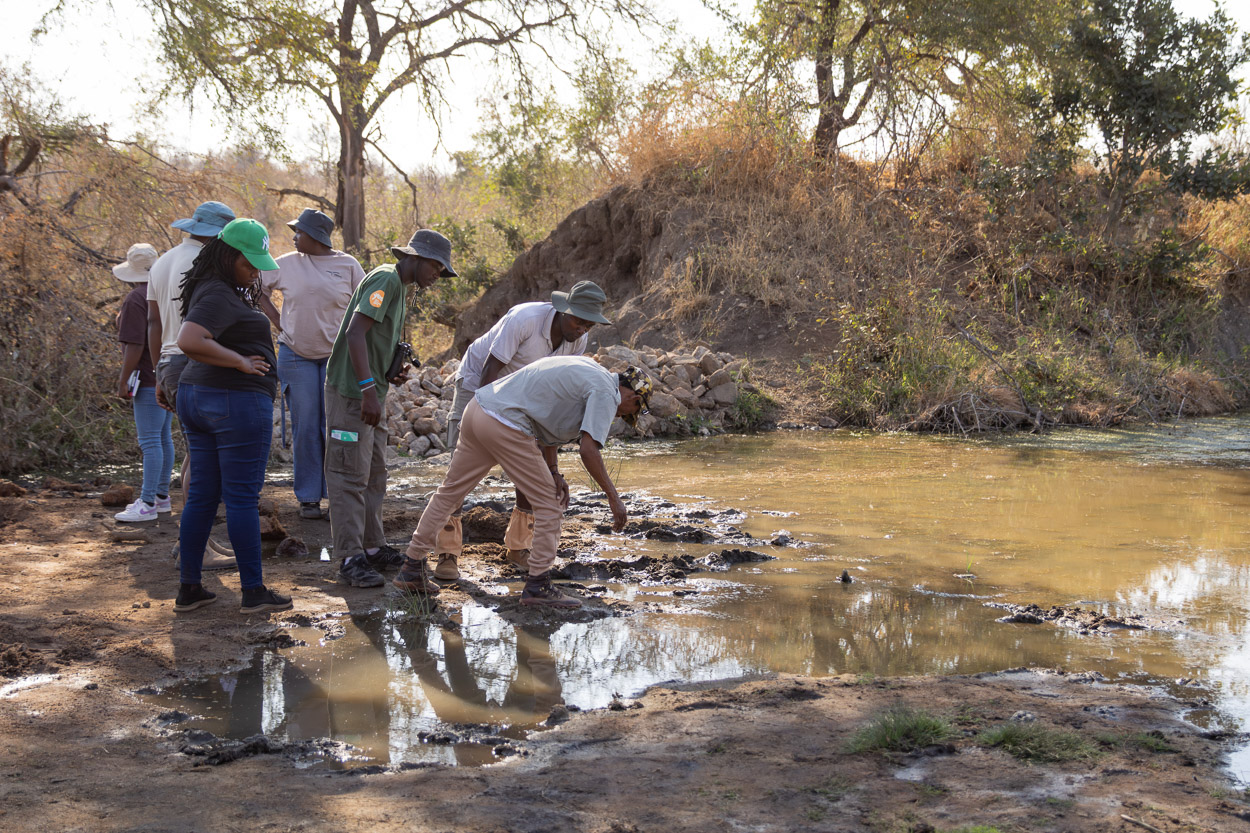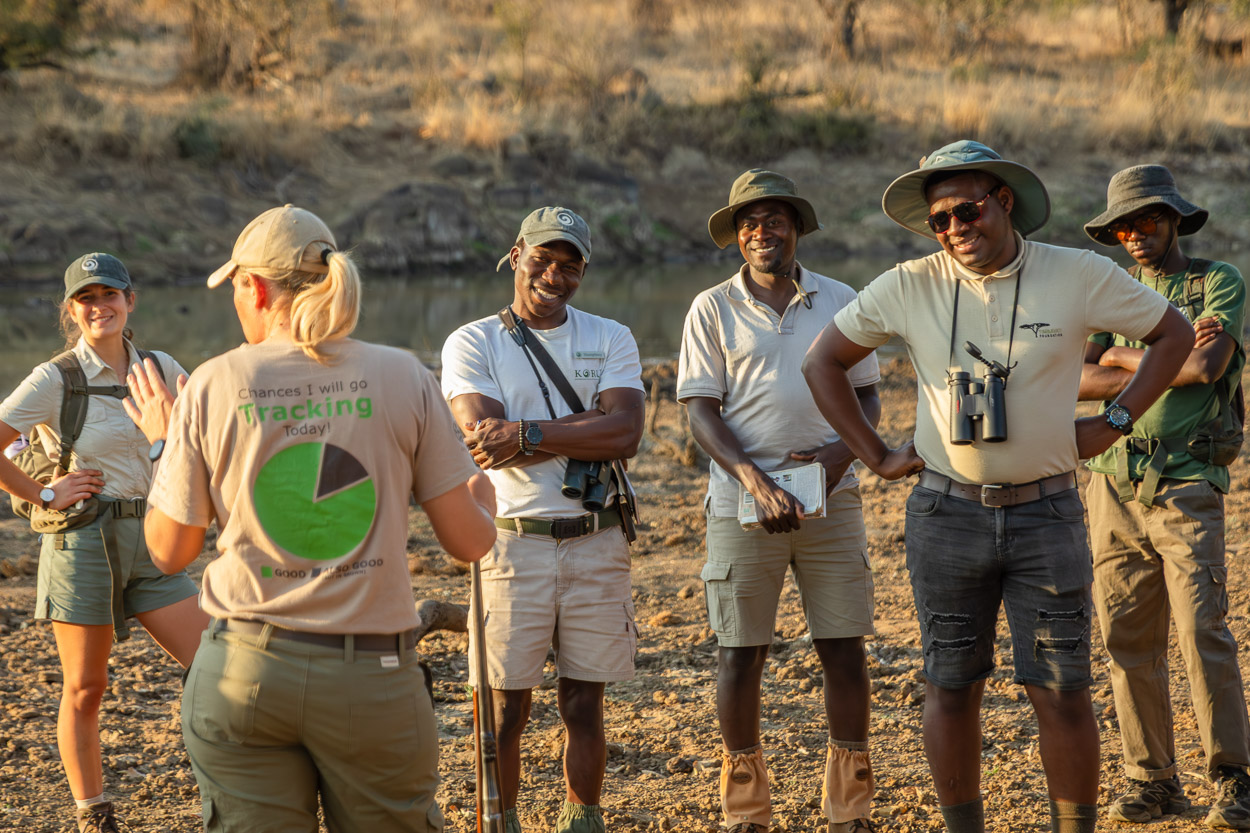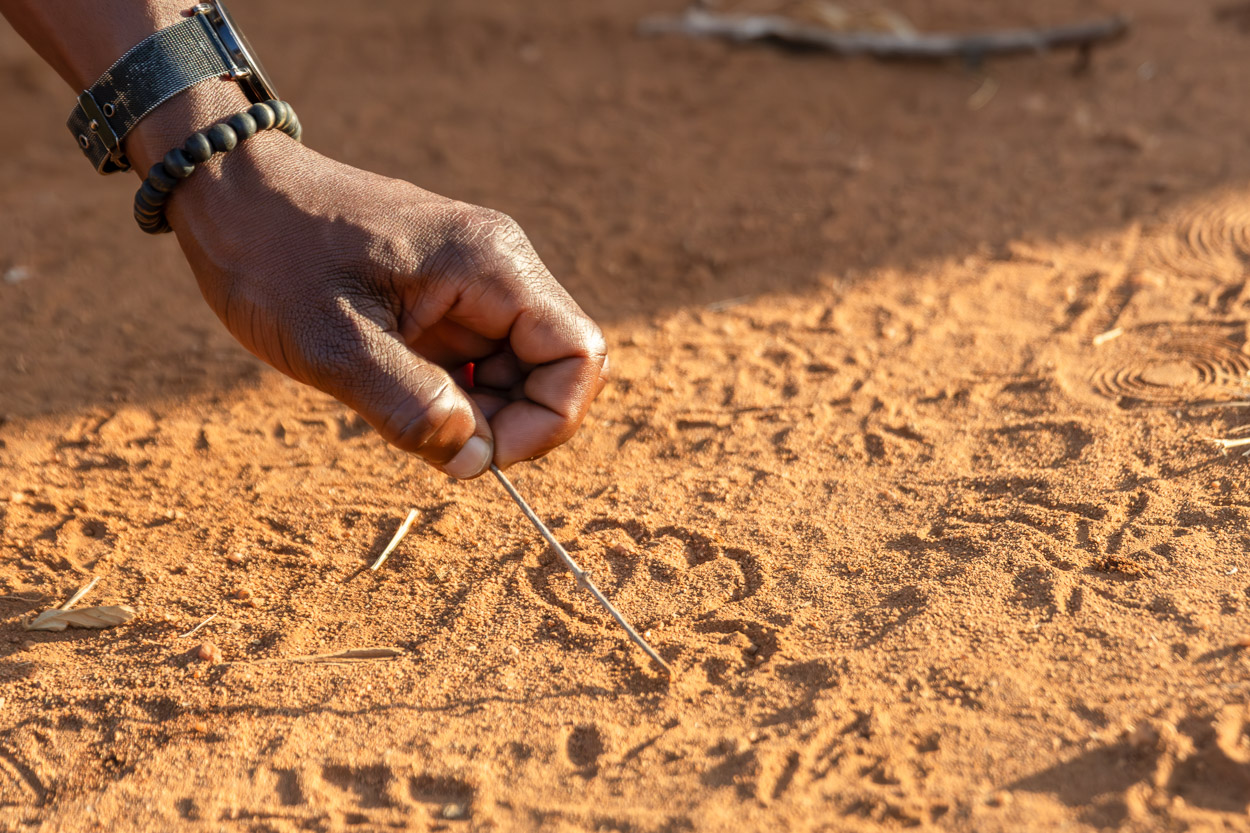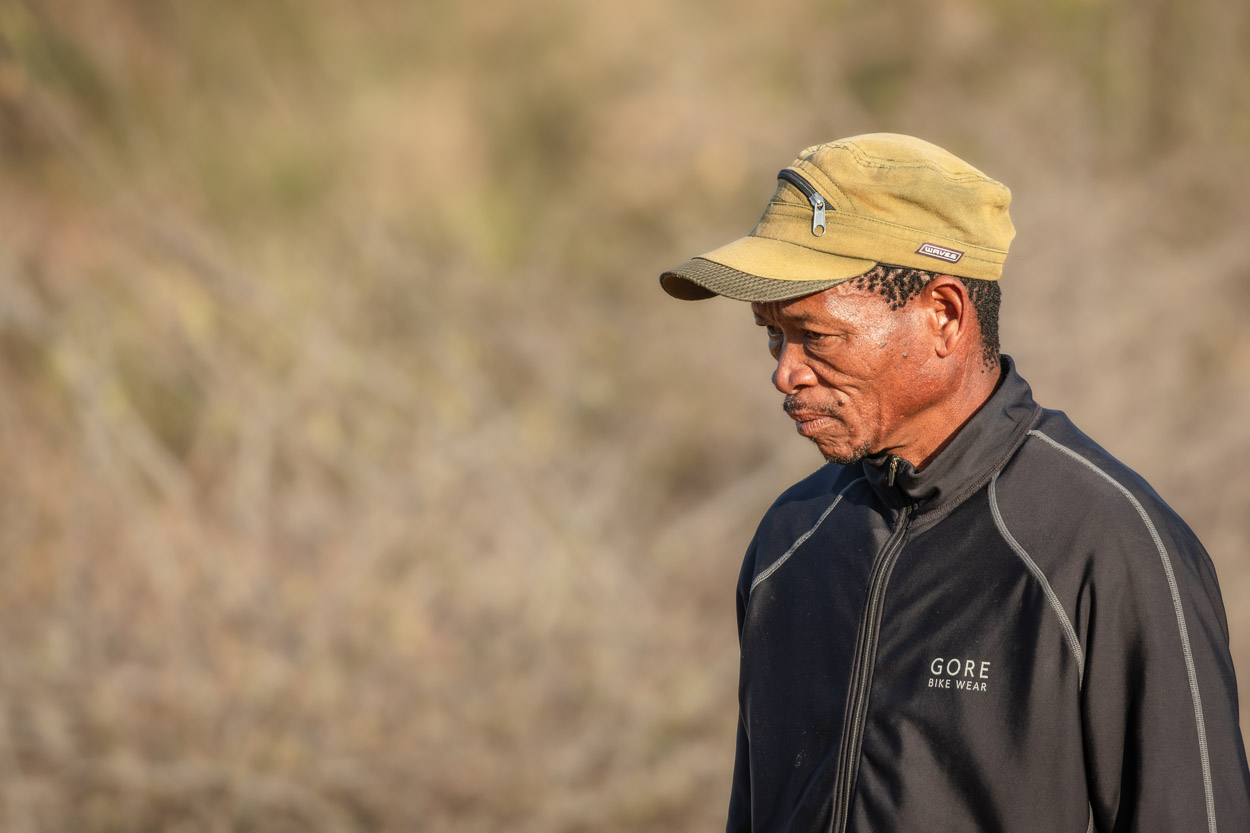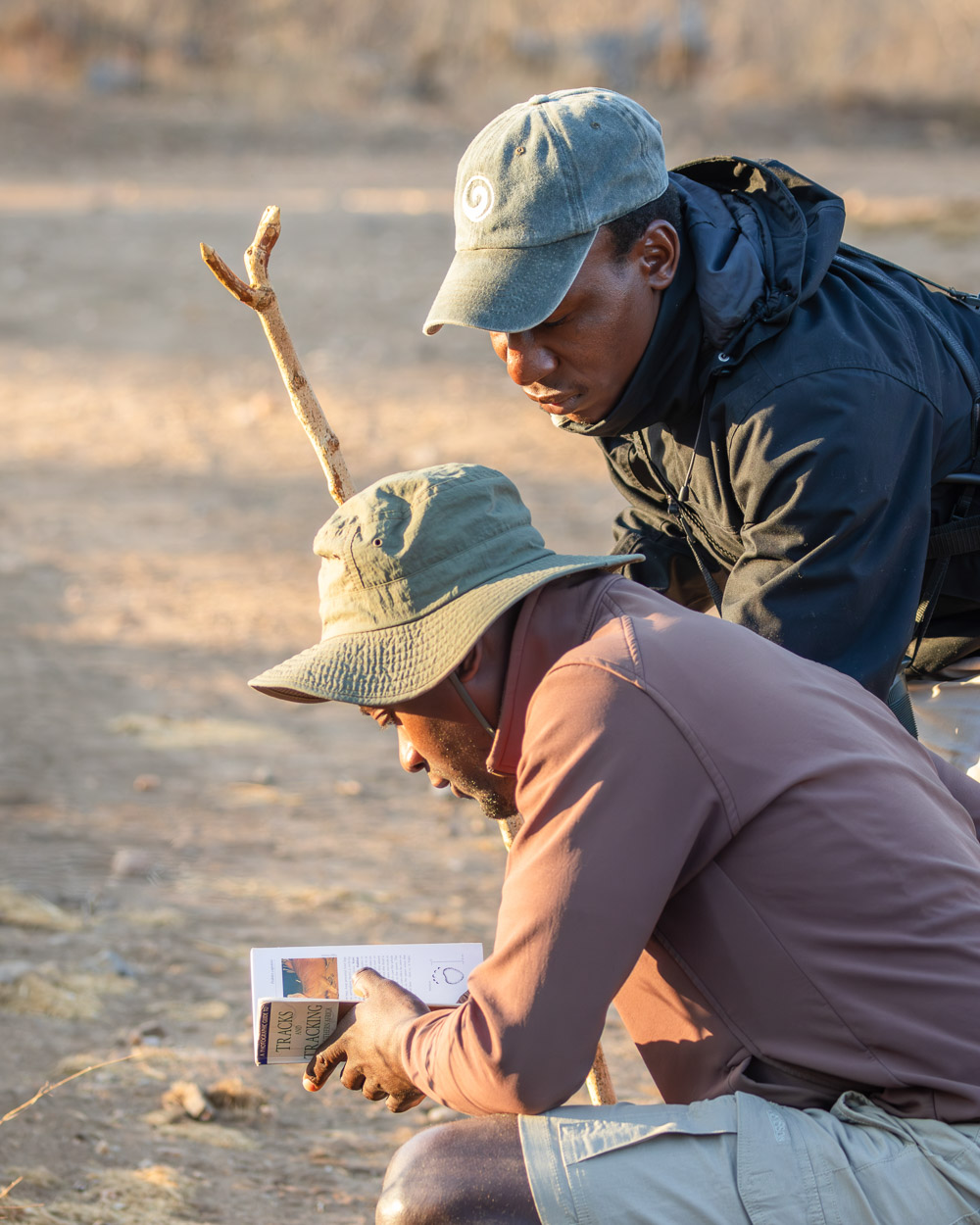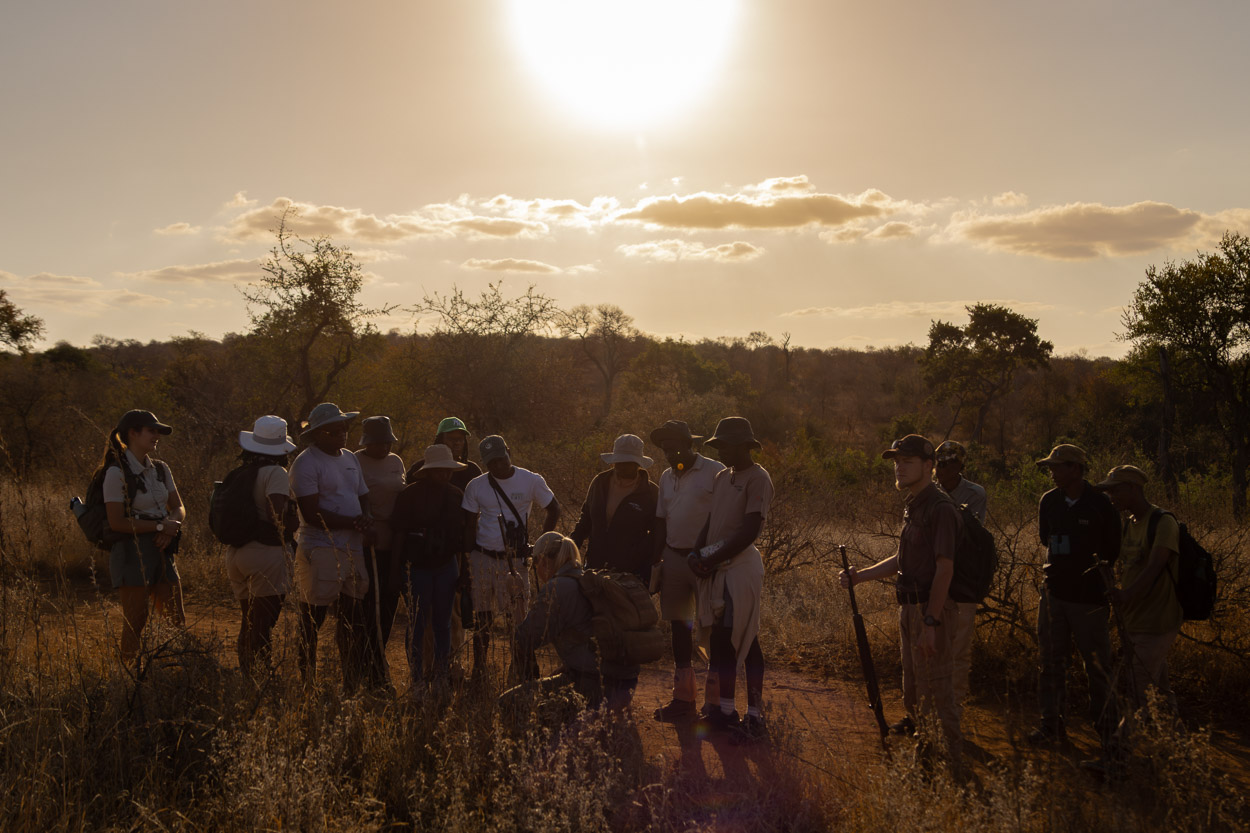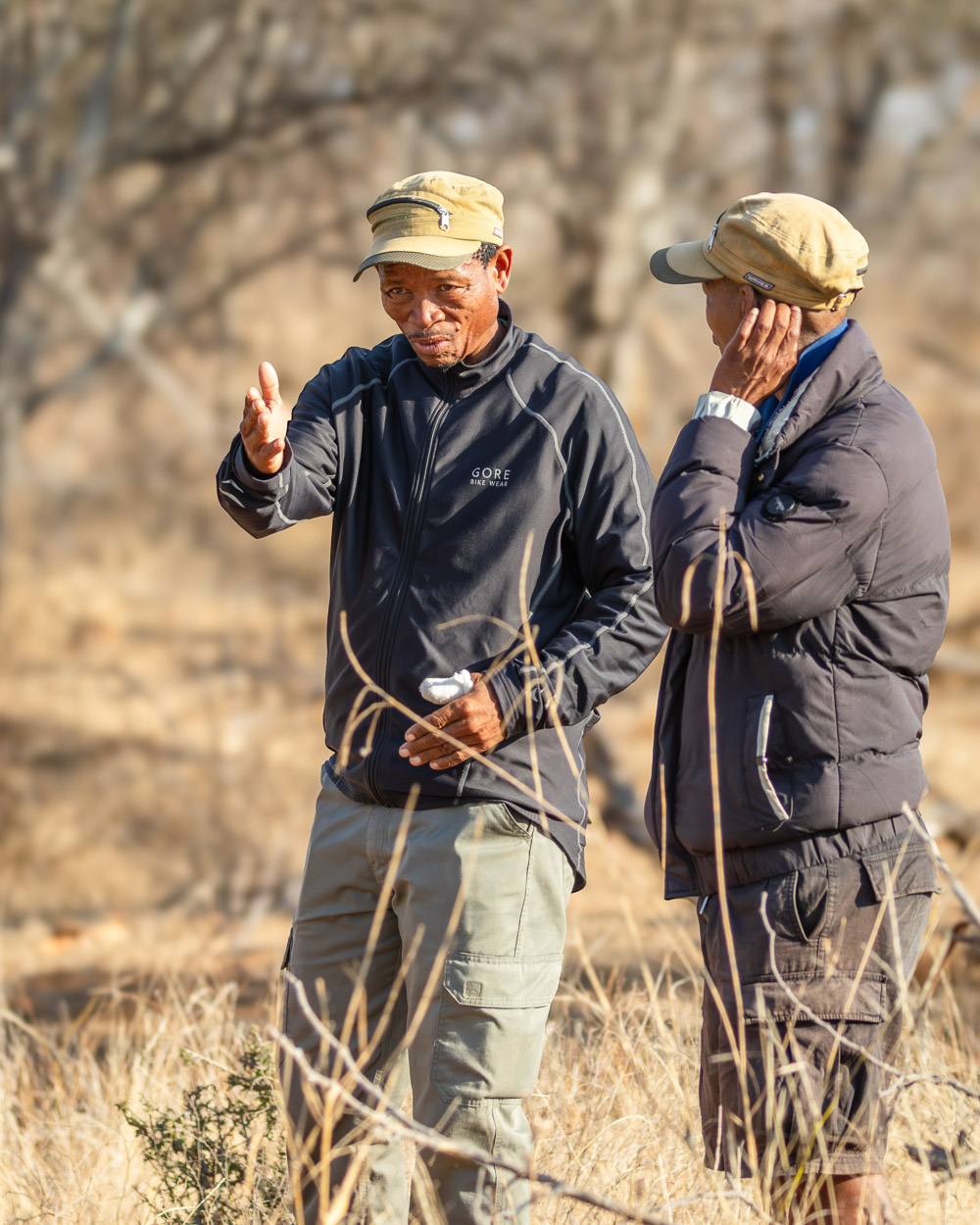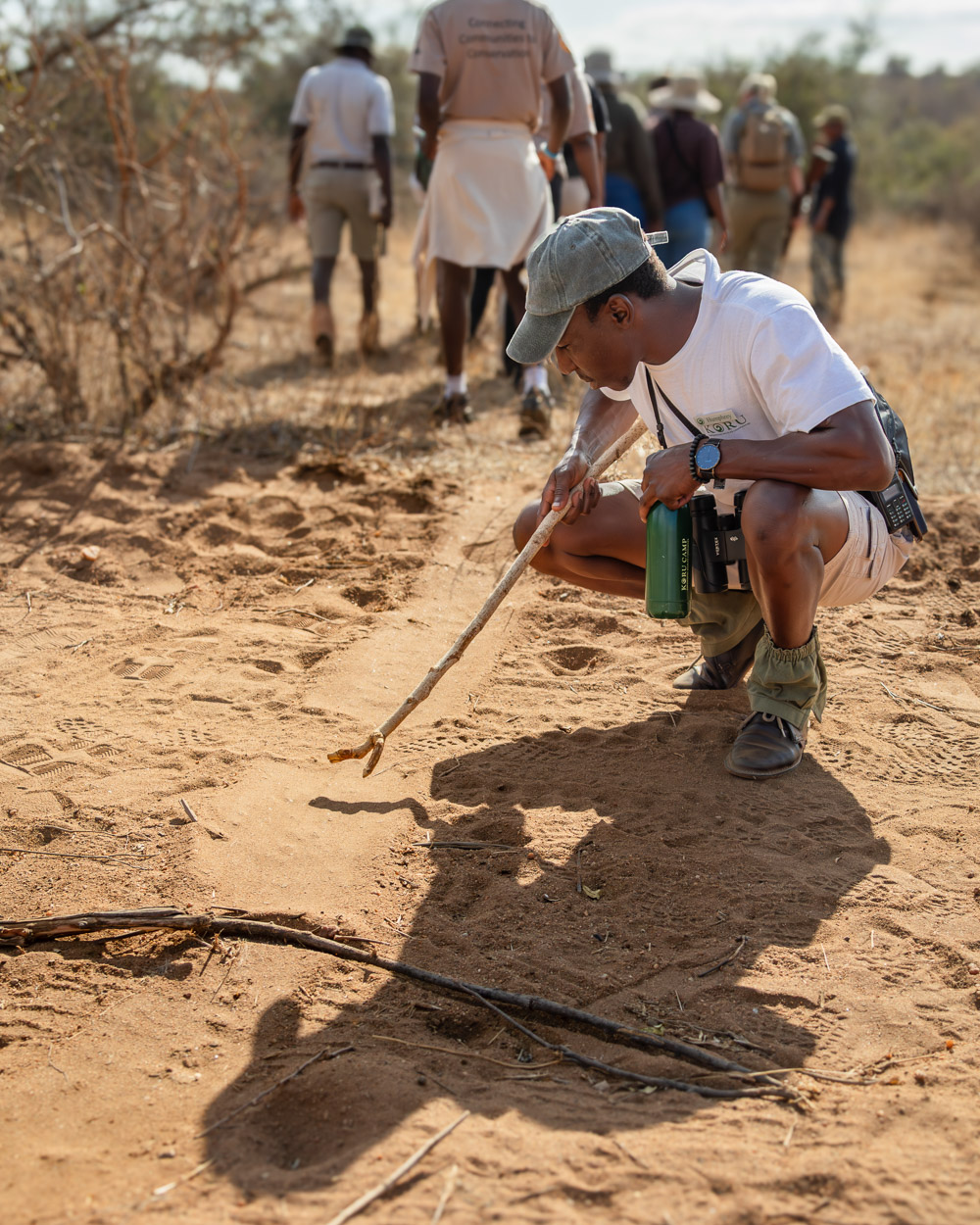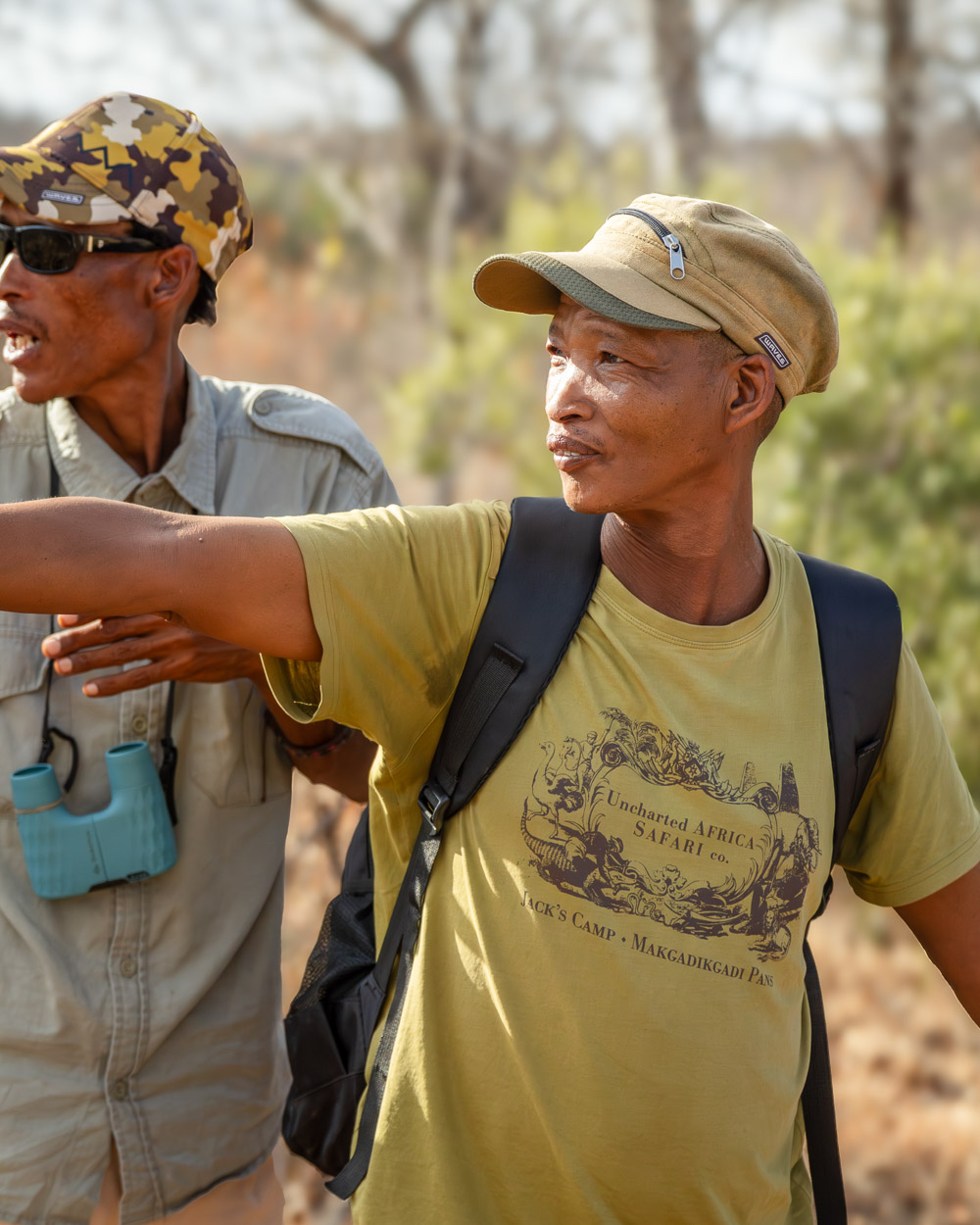
Etched into the sand were faint, delicate lines. Invited to guess, one of the group suggested porcupine quill marks. It was a creative answer, but far off on this occasion. With a smile, §Oma revealed the truth: the whisker marks of a hippo sniffing the ground. As if sensing our surprise, they pointed out a faint hippo track nearby – an obvious sign to them, but something the rest of us had completely missed. Barely minutes into the walk, and we were already humbled.
Not long after, we stumbled across a wide drag mark cutting boldly across the road. This one was unmistakable – a leopard kill! Backtracking, we found the pool of fresh blood that told the story of where it began. “It happened around midday,” said Steve with certainty. When pressed on how he could be so sure, he gestured at a patch of disturbed sand beneath a tree. “The leopard rested here to catch its breath. At 12pm, it would have been in the shade.” Such simple logic, yet insights that would never have crossed our minds.
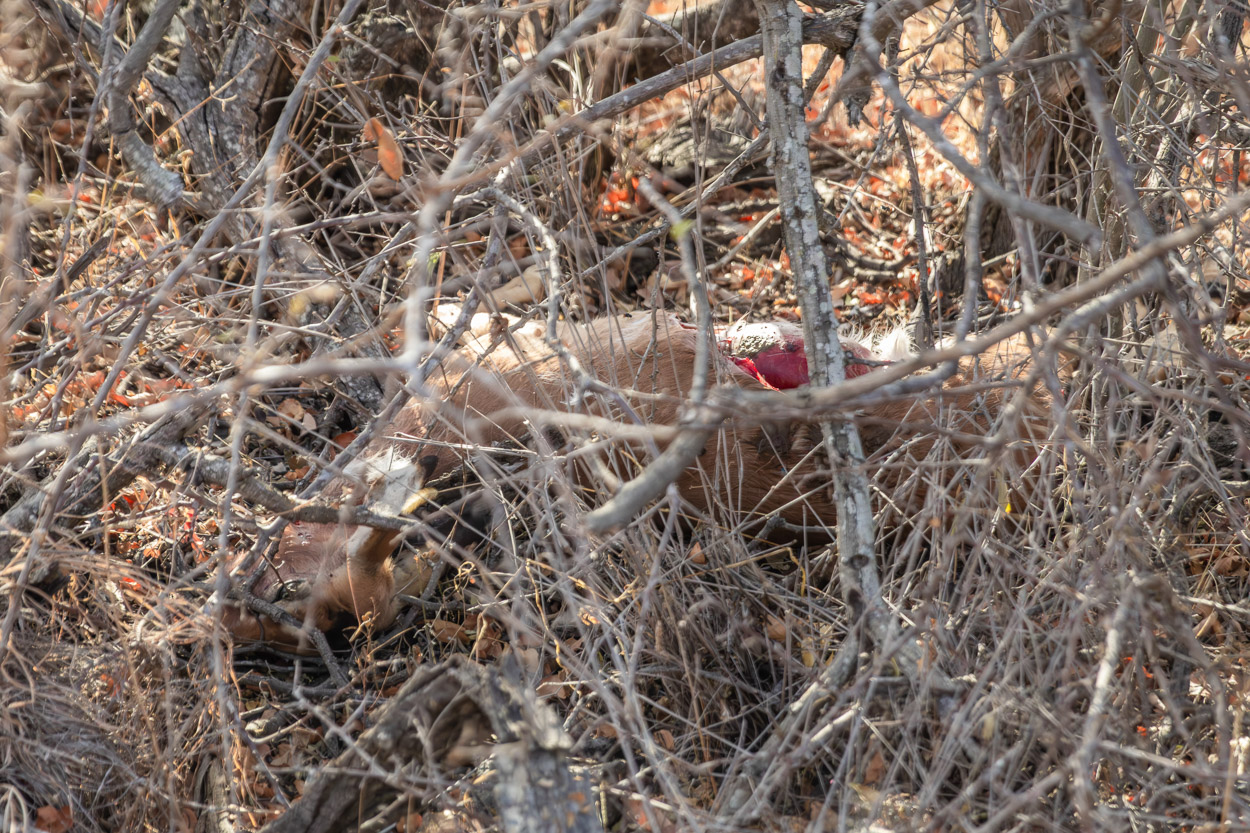
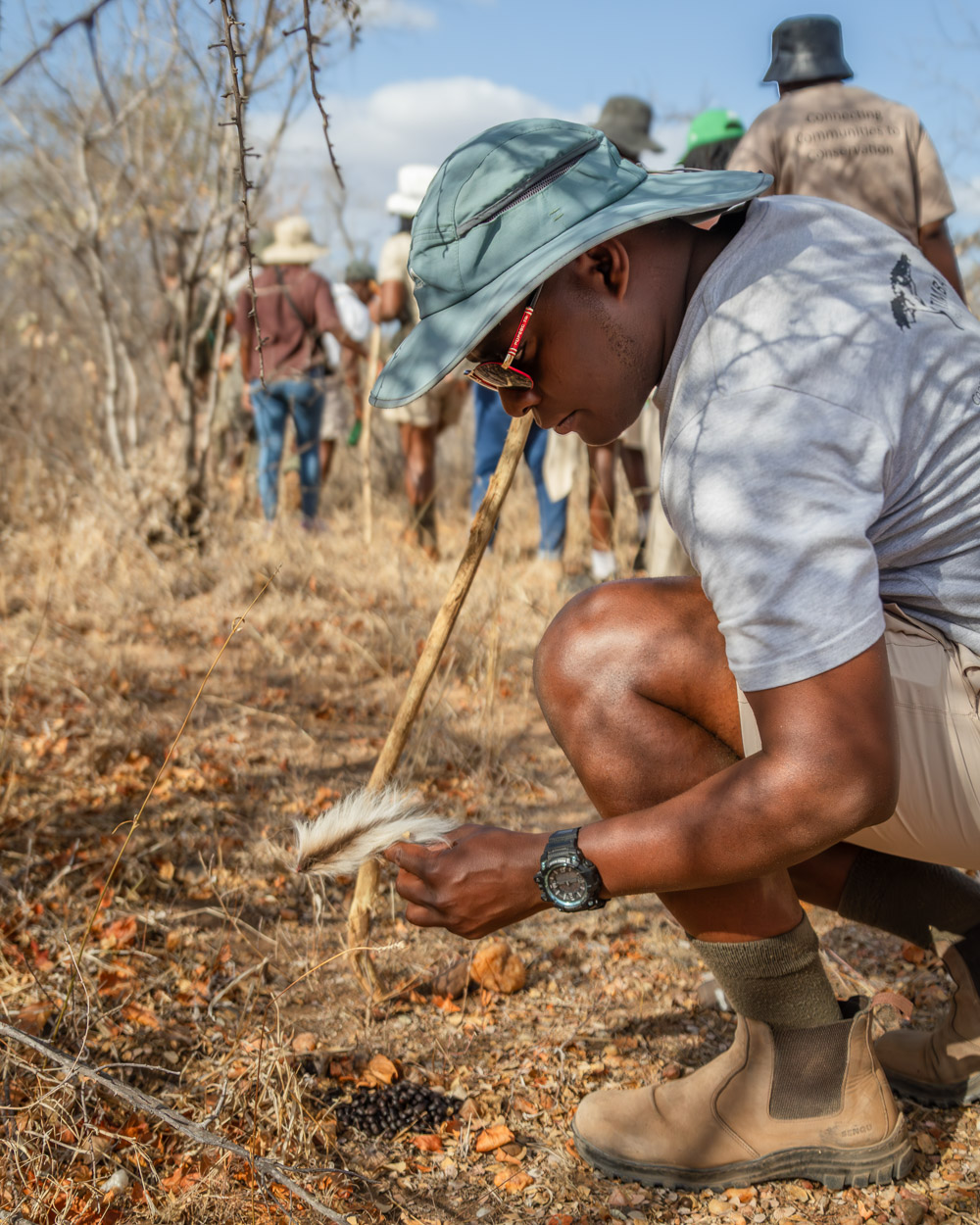
What followed next can only be described as an exercise in awe. We turned back to the road and began following the drag trail into deep bush. Where our eyes saw nothing but gravel and dry grass, the San – and lead trails guide Meg Smith – read an unfolding narrative. A bend in the grass, a speck of blood, a microscopic fleck of hair. “He rested here,” they’d say with casual confidence. Piece by piece, the invisible became visible until, at last, we found the prize: a freshly killed impala. Having travelled more than 100 metres into the bush, there lay a golden hide glowing faintly in the dappled shade. The leopard itself was absent, but the sense of triumph at having followed an “impossible” trail filled us with as much adrenaline as spotting the cat itself!
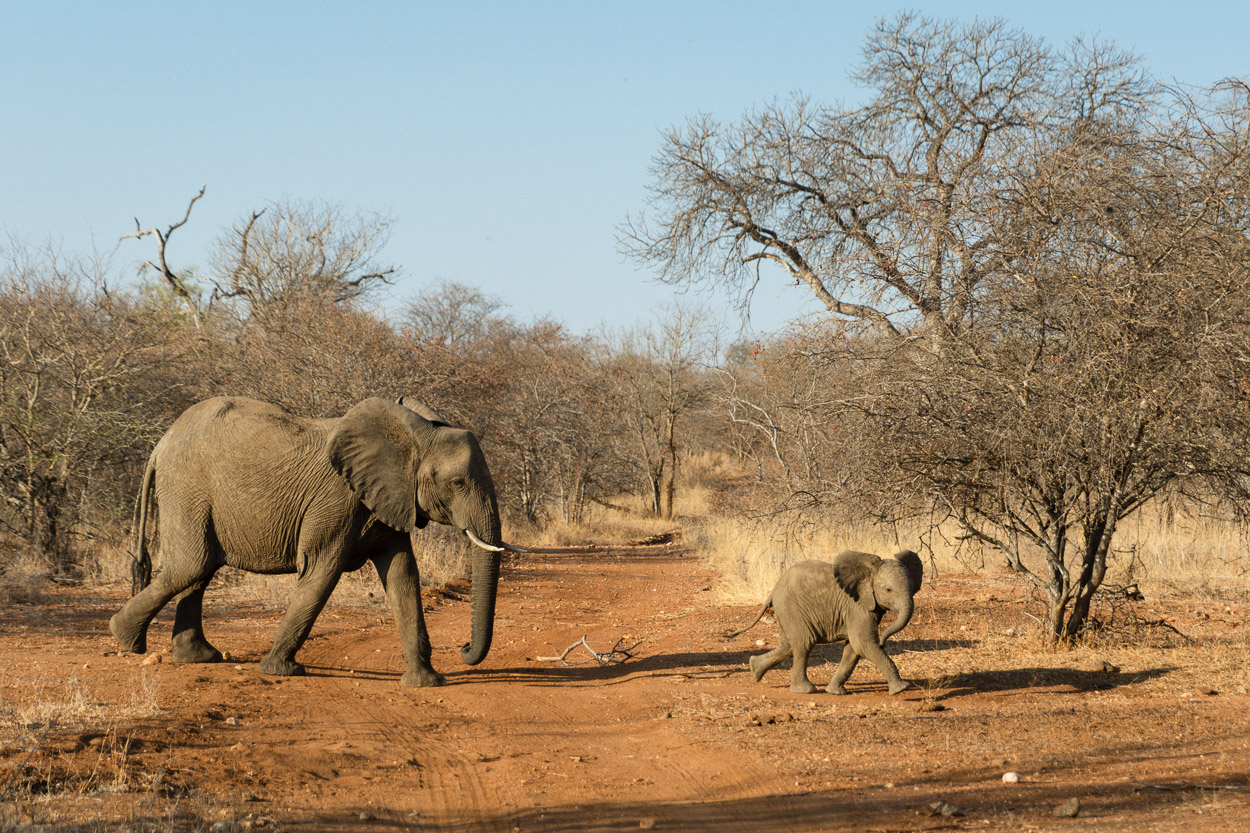
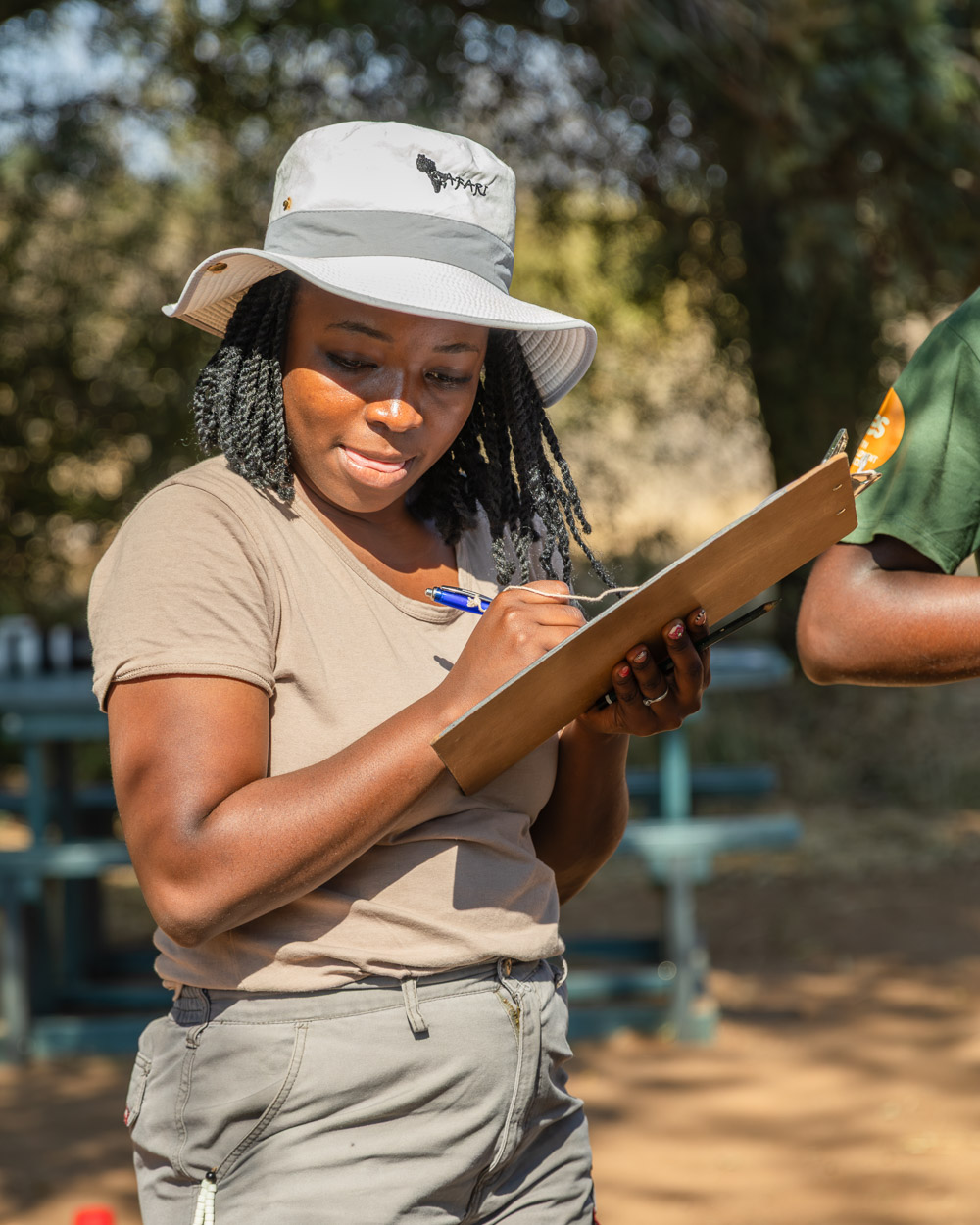
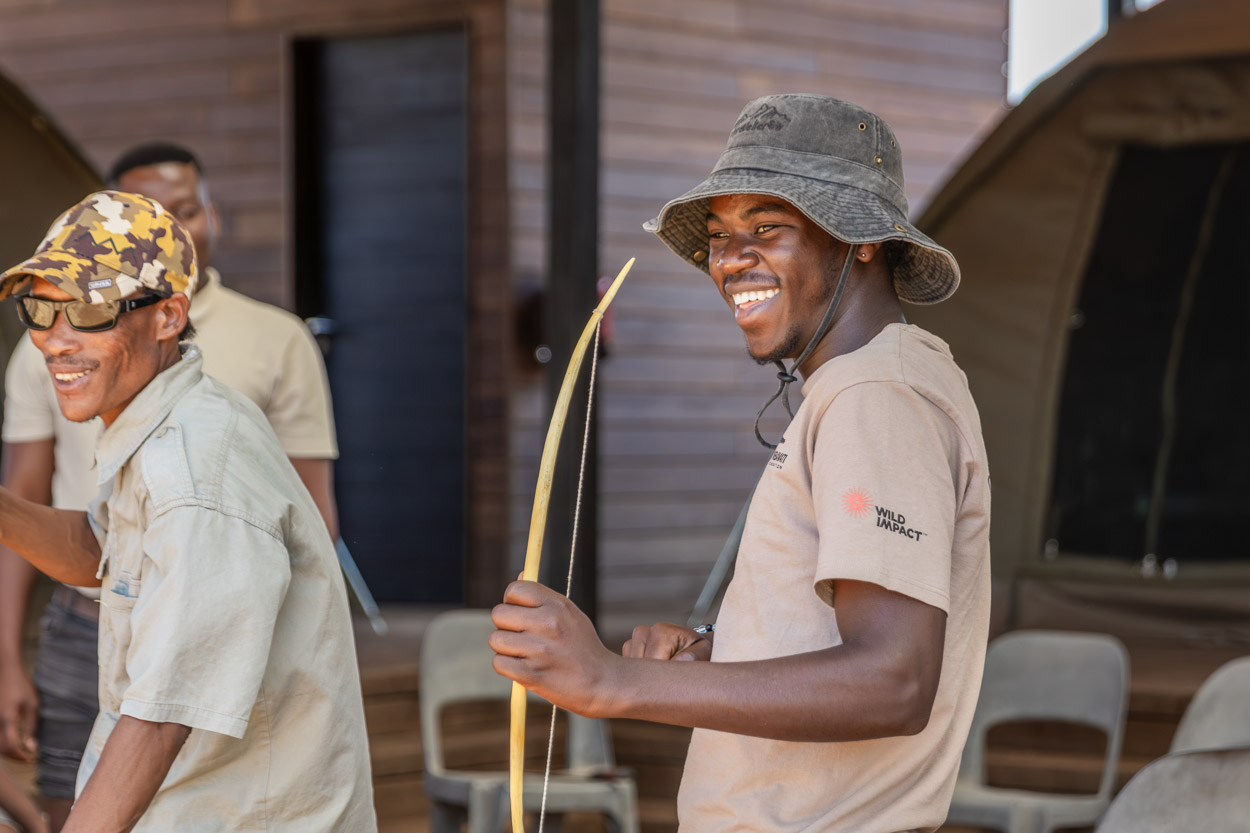
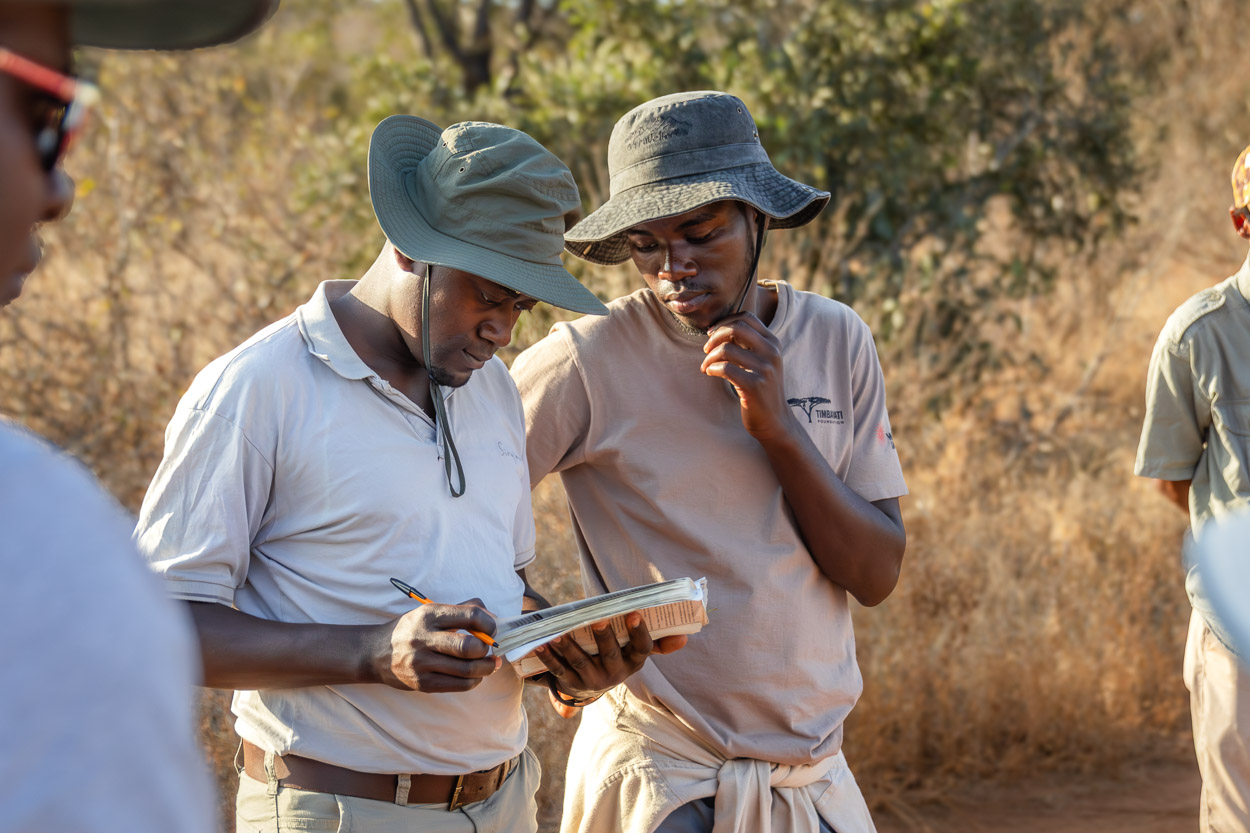
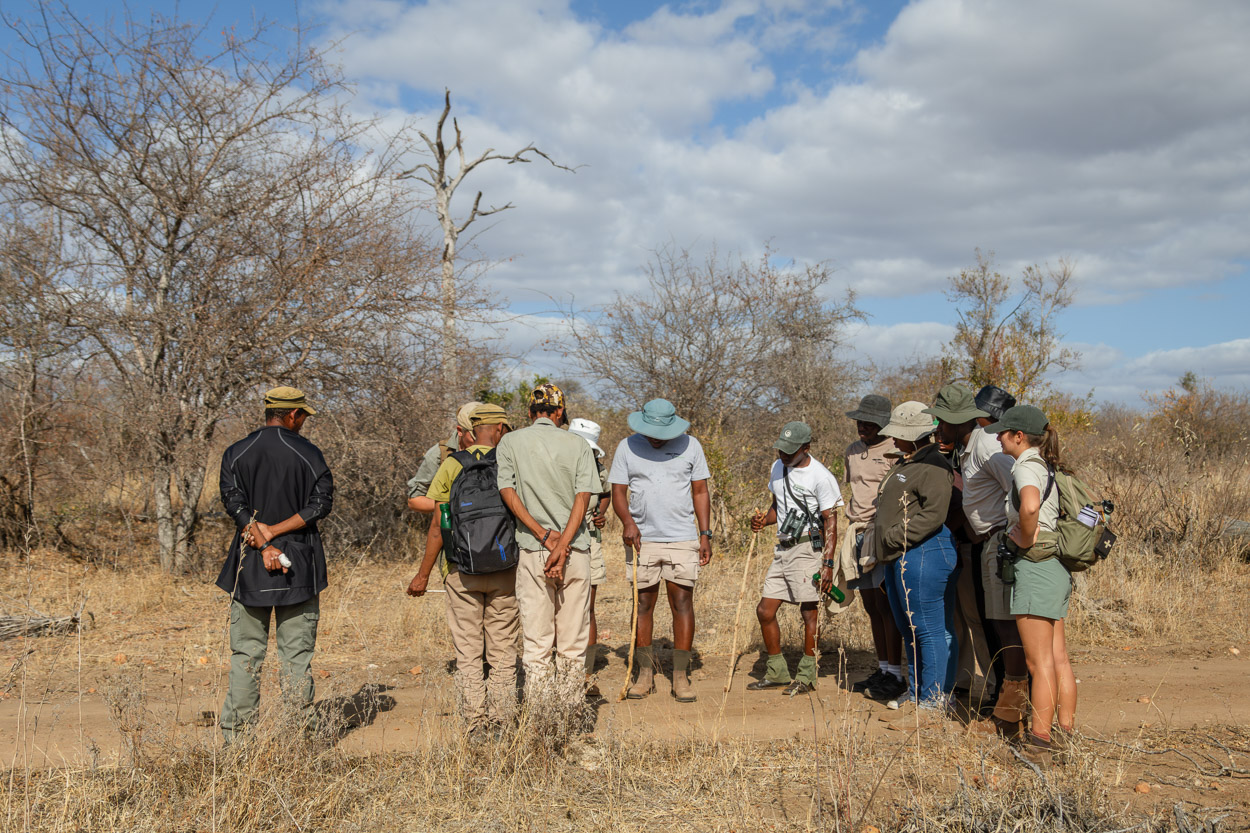
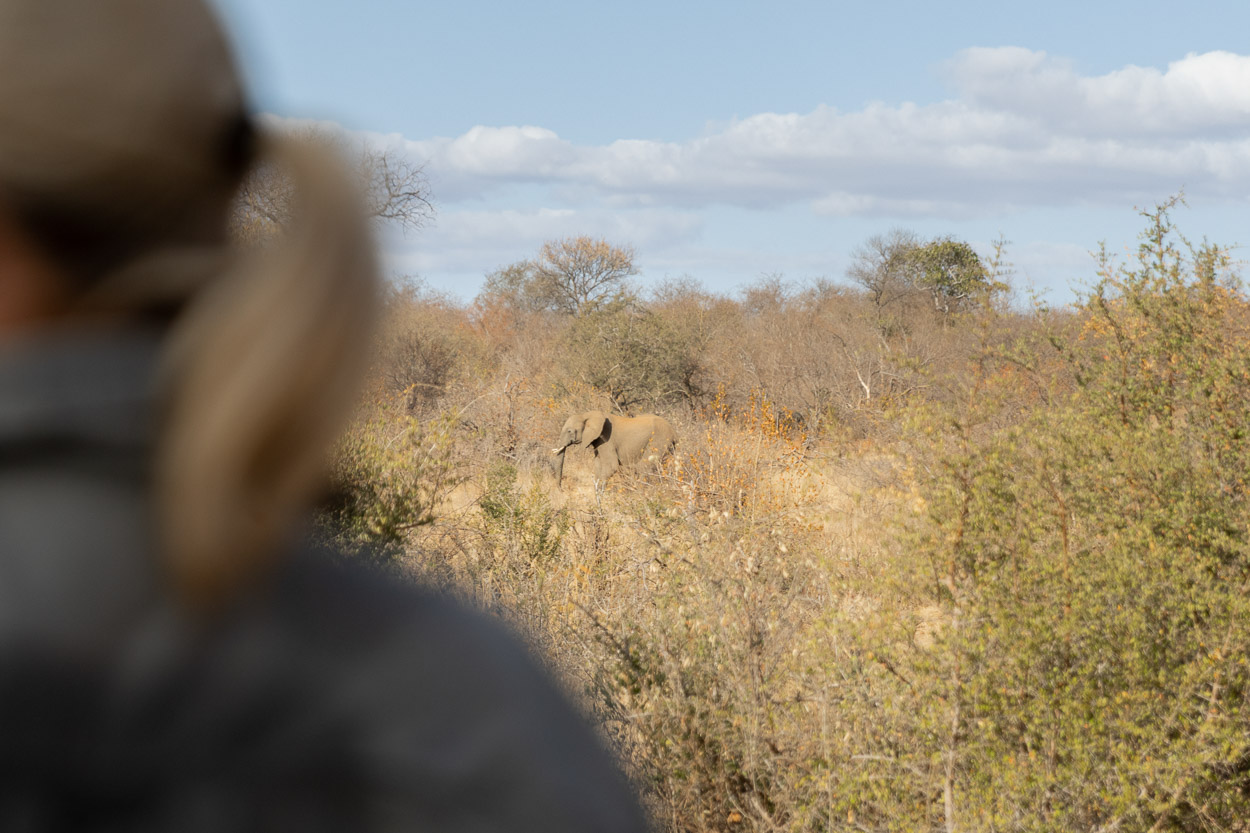
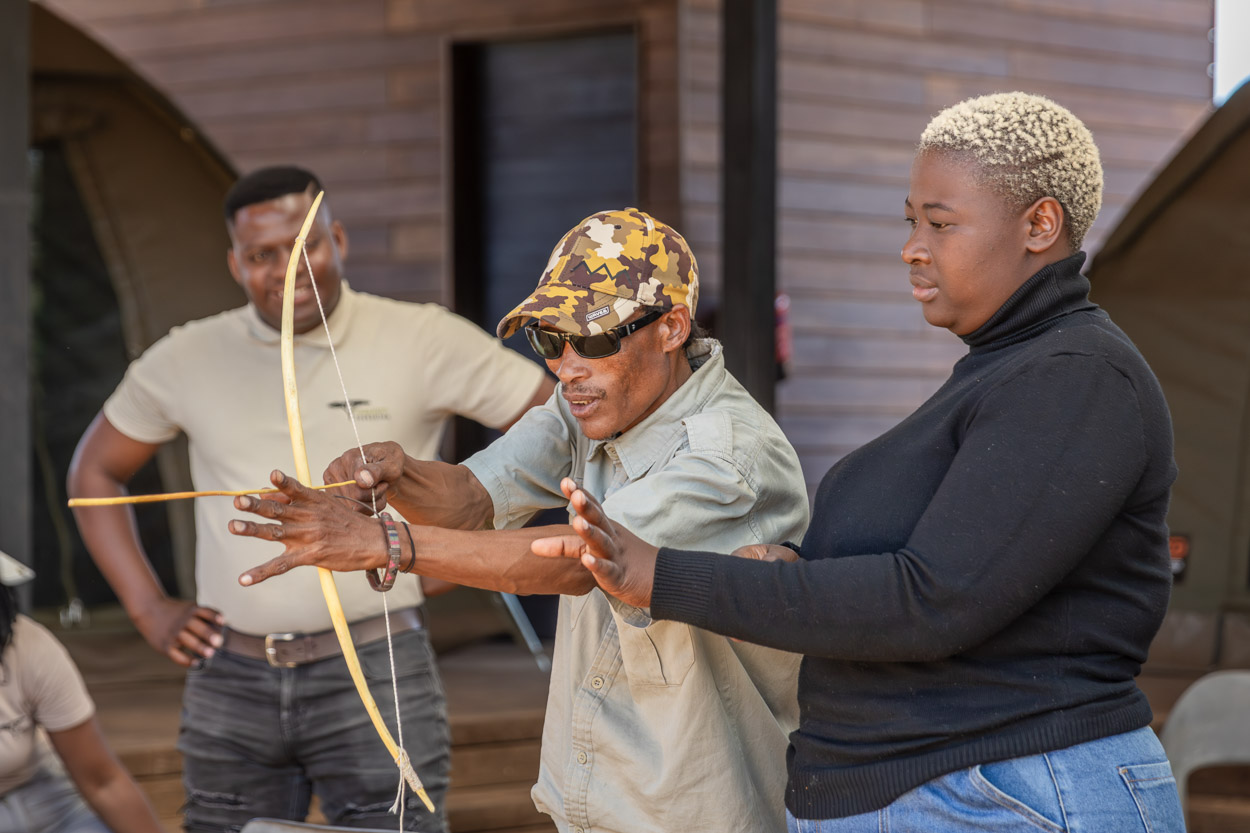
Over the next few days, moments like this continued to unfold. We encountered elephants and hippos on foot and dissected countless tracks and signs – including fresh spoor for a lioness that we chose not to follow as there are young cubs in the area. We learned the art of fire-making and traditional bow crafting in San masterclasses and practised our new tracking skills with fun, in-camp activities.
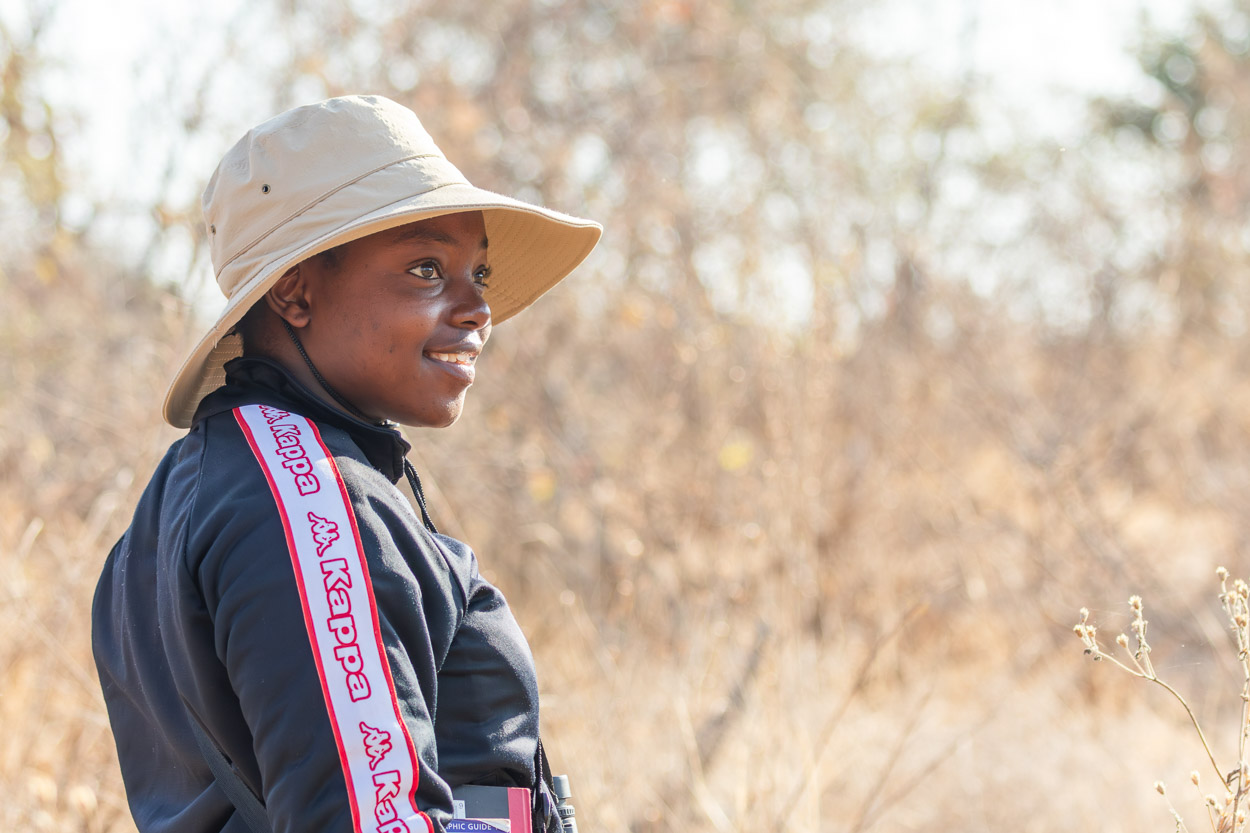
For the participants, what began as a training camp soon became something far deeper: a renewed appreciation for both this incredible wilderness, and the people who have devoted their lives to understanding it. Theirs is knowledge refined over countless generations. A deep connection that breathes life into the bush in ways most of us never thought possible.
This was only the first of our San Master Tracker camps at Koru – and what a beginning it was! With five camps in total, we can only imagine the stories, lessons, and extraordinary encounters that lie ahead. One thing is certain: the wilderness has many more secrets to reveal, and in the hands of the San, we have the rare privilege of learning how to see them.
A huge thank you to expert lead trails guide, Meg Smith, for donating her time and sharing her vast knowledge alongside the San Master Trackers, and also to back-up trails guide James Smit. Lastly, thank you to the Timbavati Foundation for joining us on this special camp and helping to share the magic of nature with our local communities.